The Netanyahu Question
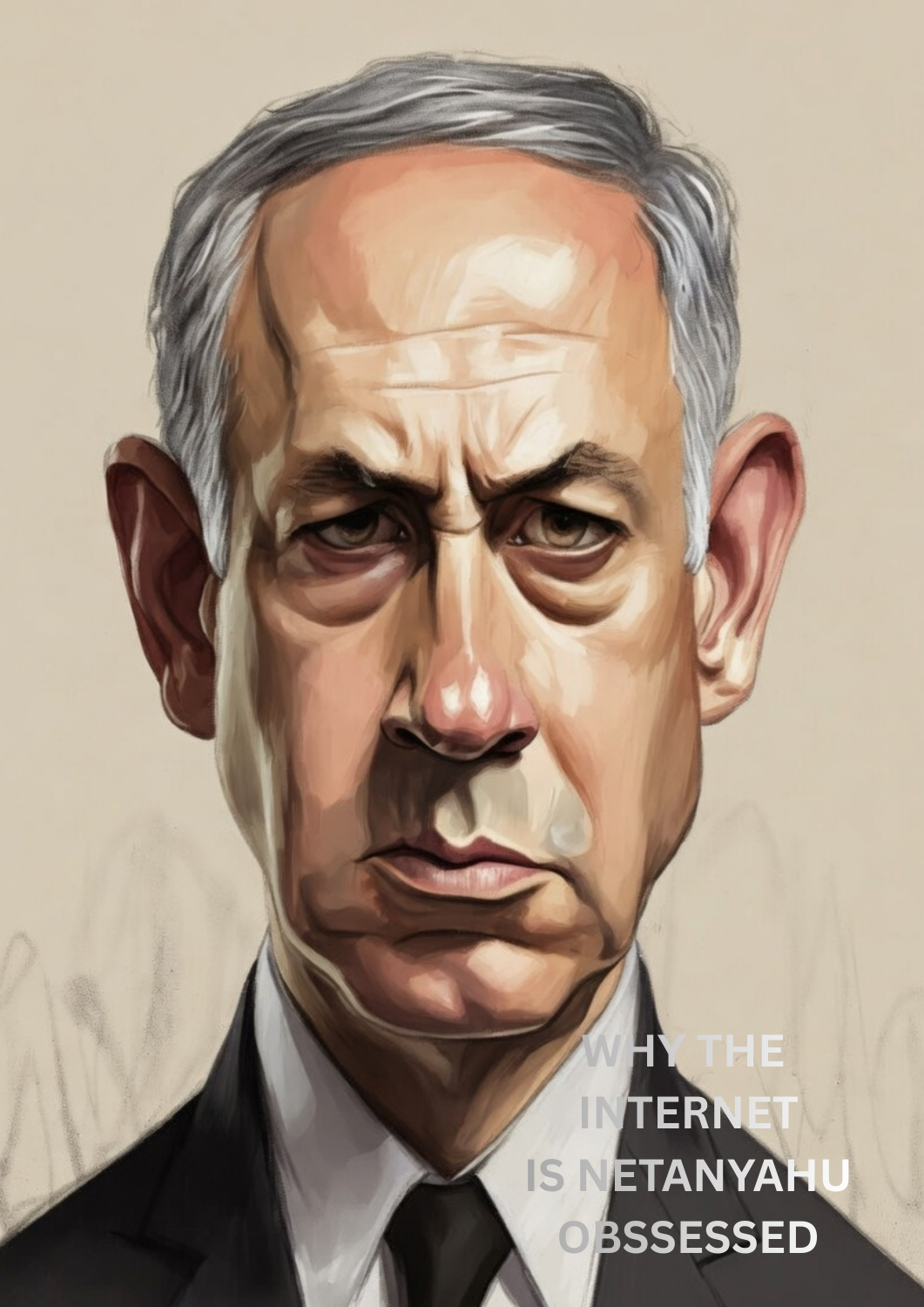
Let’s set the facts straight first: no credible mainstream media outlet has reported that Israeli Prime Minister Benjamin Netanyahu is deceased. In fact, most reports consistently state that he is active and well.
Then comes the internet—where this story truly takes on a life of its own. What we’re seeing is a rumor that simply refuses to die.
The frenzy began about four days ago following one of his televised addresses. A split-second hand gesture caught viewers’ attention, and to many eyes, the footage appeared to show Netanyahu with six fingers. That brief moment was enough to ignite speculation. Soon after, Iranian media amplified claims that the prime minister had been struck in an attack. Mainstream outlets quickly stepped in, fact-checking the footage and concluding it was likely just a shadow illusion.
But here’s the thing about the internet: once a seed of doubt is planted, it doesn’t just grow—it spreads uncontrollably.
Then came Netanyahu’s response videos.
Video #1: The Coffee Shop “I’m Dying for Coffee” Clip (March 15)
Posted from a café in Tel Aviv, the prime minister jokes, “They say I’m what? I’m dying for coffee!” He raises his cup, briefly shows his hands, and pokes fun at the conspiracy theories. The intention was clear: lighthearted proof that he’s fine and continuing his duties.
Instead, the internet tore it apart.
Viewers pointed out that the latte foam never seemed to move, even after multiple sips. A coffee stain appears on his lips, yet the liquid level in the cup looks unchanged. Others highlighted supposed glitches—odd eyelid movements, shifts in his hair part, and slight mismatches in throat motion. Some even claimed AI detection tools flagged the clip as a deepfake. The video quickly went viral, racking up millions of views and spawning countless slow-motion analyses.
Video #2: The Jerusalem Hills Follow-Up (March 16)
Undeterred, Netanyahu released a second video the next day—this time outdoors in the Jerusalem Hills. In the 90-second clip, he speaks with civilians and soldiers, again showing his hands while stating, “Still here, still in charge.”
But the scrutiny only intensified.
Viewers claimed his wedding ring briefly disappears during a hand gesture before reappearing moments later. Others pointed to “disappearing teeth” in frame-by-frame breakdowns, along with pixel distortions and unusual hand movements some described as “AI rendering artifacts.”
So why is the internet so obsessed? Is this genuine concern—or just large-scale trolling?
It’s likely a perfect storm of factors:
Netanyahu’s status has turned into a kind of internet mystery, and the presence of two widely questioned videos has only fueled deeper speculation.
We’re living in an era where AI increasingly blurs the line between real and fake. Every minor visual inconsistency—reflections, shadows, micro-movements—becomes a potential red flag.
He is also a deeply polarizing figure. That kind of visibility creates a constant stream of high-engagement conspiracy content, amplified by algorithms that reward attention.
There have been no widely accepted, spontaneous live appearances or independent, on-the-ground confirmations that satisfy skeptics.
And perhaps most importantly, the internet loves playing detective—slowing clips down, zooming in, comparing frames, and running footage through AI detection tools in search of hidden truths.
The amplification by Iranian media has further intensified the narrative, adding geopolitical weight to what might otherwise have remained a fringe theory.
Ironically, “proof-of-life” videos don’t resolve the issue—they often make it worse. Each new clip invites more scrutiny, more analysis, and more conspiracy, creating an endless feedback loop.
Here’s the bottom line:
In an age of rapidly advancing AI, the line between reality and fabrication is becoming increasingly difficult to define. The real casualty here isn’t whether a video is authentic or manipulated—it’s trust itself.
What the internet is questioning isn’t just whether Netanyahu is alive. It’s something much deeper: what does “real” even mean anymore?
In the age of AI, doubt isn’t a byproduct—it’s the main event.