On Cuba
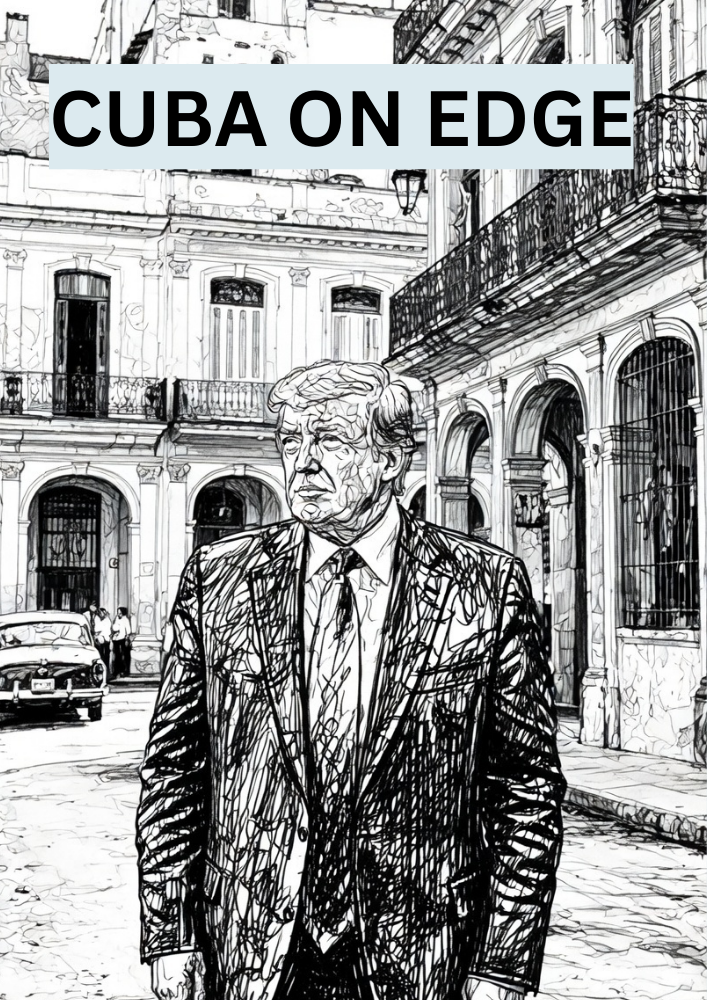
President Donald Trump recently made a striking claim, suggesting he would have “the honor of taking Cuba” and that he believes he can do whatever he wants with it. Statements like these don’t just make headlines—they send shockwaves far beyond Cuba, raising serious questions about what he actually meant. Was this rhetorical bravado, talk of a “friendly takeover,” or something more concrete that could further destabilize an already fragile situation on the island?
Whatever the intent, these remarks do not translate into grounded or responsible policy—and there are several reasons why.
First, such a notion directly conflicts with the fundamental principles of sovereignty and international law. The framework established by organizations like the United Nations makes it clear that one nation cannot simply absorb or replace another’s government. Even framing it as a “friendly” move would likely be seen globally as a form of neo-imperialism, handing geopolitical rivals an easy narrative to rally opposition against the United States. Across Latin America, where memories of U.S. intervention still run deep, governments would almost certainly respond with condemnation, further isolating Washington at a time when regional cooperation is critical.
Second, history offers a clear warning. The failed Bay of Pigs invasion in 1961 showed how attempts to “liberate” Cuba can backfire dramatically, strengthening nationalist resolve rather than weakening it. That episode helped solidify Fidel Castro’s grip on power and brought the world to the brink of nuclear conflict during the Cuban Missile Crisis. Cuban identity has long been shaped by resistance to outside control, and any modern attempt to impose change from abroad would likely trigger prolonged instability, internal conflict, and a surge in migration—especially toward Florida.
Third, the practical costs of such a move would be staggering. Stabilizing Cuba after any forced transition would require massive financial investment, long-term political commitment, and potentially a sustained military presence. The experiences of Iraq and Afghanistan demonstrate how quickly so-called “quick interventions” can spiral into costly, years-long engagements. Given Cuba’s proximity to the U.S. and its established security apparatus, maintaining control would likely prove even more complex.
Fourth, the geopolitical consequences would be immediate. Cuba maintains relationships with global powers like Russia and China, and any aggressive U.S. move could deepen those ties or spark new tensions. Instead of weakening adversarial influence, such actions could unintentionally strengthen it, while also fueling anti-American sentiment on a global scale.
Finally, there are more effective and sustainable alternatives. A strategy that combines targeted pressure with meaningful diplomatic engagement offers a far more realistic path forward. Past efforts at normalization demonstrated that economic and cultural exchange can gradually open space for reform. Real change—whether in human rights, economic policy, or governance—is far more likely to endure when it is driven by Cubans themselves, not imposed from outside.
Ultimately, strength in foreign policy isn’t measured by bold claims or sweeping declarations. It’s measured by the ability to achieve lasting outcomes without creating new conflicts or draining national resources. Cuba’s future should be shaped by its own people, with thoughtful support from the United States—not by force, ownership, or rhetoric that risks turning a complex situation into a historic miscalculation.