Tactical but not Strategic
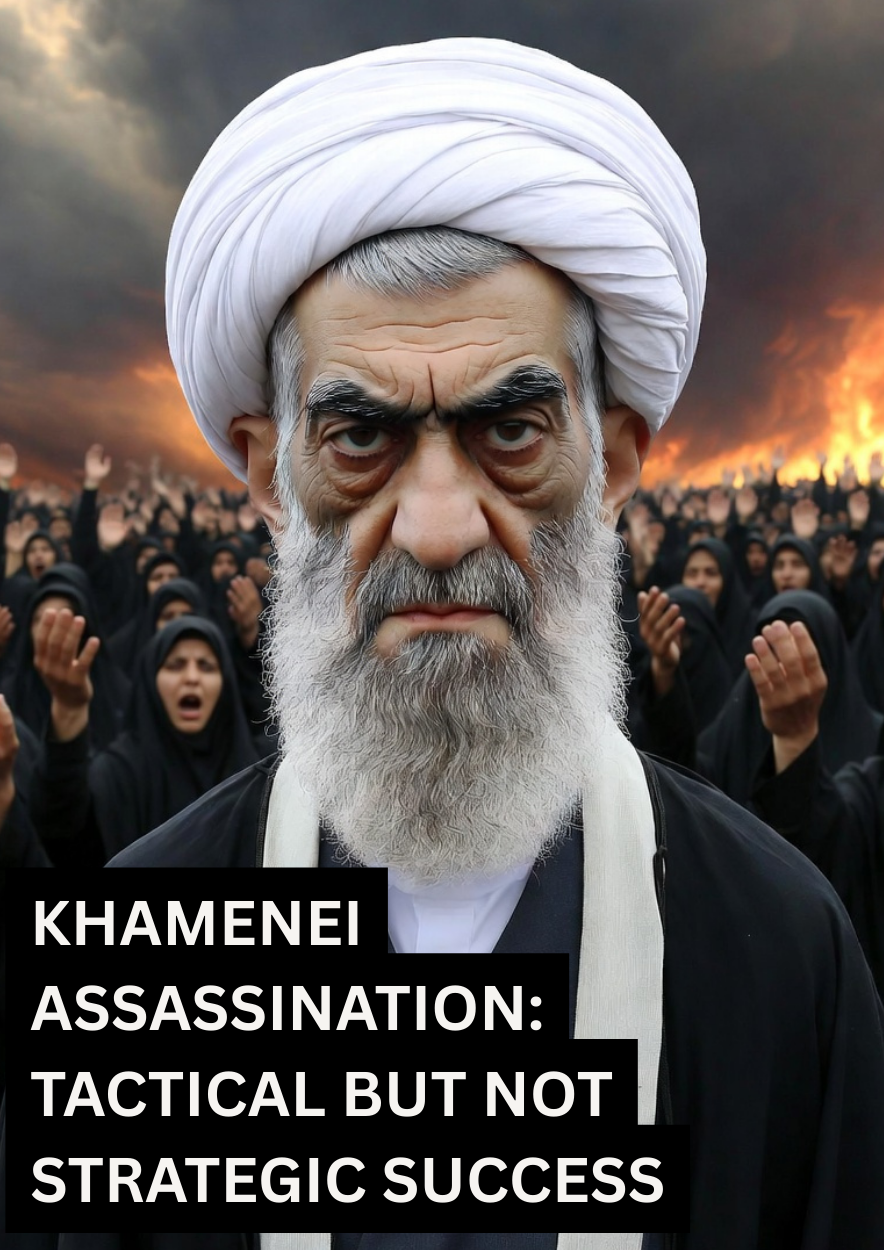
The assassination of Iran’s Supreme Leader Ali Khamenei was a tactical success but not strategic. It removed one man but handed the Islamic Republic its most potent rallying cry in a generation. The institutions he built are proving more resilient than the man himself. The war that follows will be long, ugly, and expensive — primarily for the United States and its regional partners.
Regime change does not come from precision strikes on old men. It comes from internal collapse. And right now, external aggression is doing the opposite: welding the regime’s fractured elite back together and giving millions of ordinary Iranians a reason — however reluctant — to close ranks.
The Islamic Republic is not immortal. But killing its Supreme Leader in wartime may have just bought it another decade of life.
The Islamic Republic was built to survive the death of its founder Ayatollah Khomeini in 1989; it has now demonstrated it can survive the death of his successor under fire. Iranians, whatever their private grievances, are closing ranks against outsiders bombing their capital. Succession is proceeding by the book. And the costs to the United States—American lives lost, oil prices spiking, global shipping paralyzed—are real and immediate, while the payoff of genuine regime change remains a distant fantasy.
History is littered with examples of “decapitation strikes” that only strengthened the very regimes they targeted—Qasem Soleimani in 2020 being only the most recent. The killing of Ayatollah Khamenei looks set to join that list. The Islamic Republic will endure, chastened and more defiant, while America and its allies pay the price in blood, treasure, and strategic credibility.
The conflict is already widening. Iran has retaliated with missile and drone barrages against U.S. bases in the Gulf, Israeli targets, and American-aligned Arab states. Four U.S. service members have already been killed, with more wounded—the first American combat deaths in this operation. Expect more: Iranian proxies (Houthis, Shia militias in Iraq and Syria, Hezbollah remnants) will intensify asymmetric attacks, while the IRGC’s remaining ballistic missile force—much of it hardened in underground silos—can still reach U.S. assets across the region.
Khamenei was not caught unprepared. For years he had groomed institutions and individuals for exactly this moment. Within hours of his death, Iran activated Article 111 of its constitution: a three-person interim Leadership Council (President Masoud Pezeshkian, Judiciary Chief Gholam-Hossein Mohseni-Ejei, and senior cleric Ayatollah Alireza Arafi) assumed supreme authority. The 88-member Assembly of Experts—itself elected and stacked with loyalists—has already begun deliberations and could name a permanent successor within days or weeks.
Potential frontrunners (Mojtaba Khamenei, Mohseni-Ejei, Arafi, or even Hassan Khomeini) represent continuity, not rupture. The Revolutionary Guards (IRGC) and the clerical establishment remain intact. There is no “power vacuum” in the chaotic sense Western analysts often imagine; there is a constitutional handoff already practiced in war-gaming sessions. Khamenei’s advanced age made succession planning not a distant theoretical exercise but an urgent, long-running project. That project is now paying dividends.
On the other side of the coin, the United States is already paying in blood and treasure.
As of March 2, at least four U.S. service members have been killed in Iranian retaliatory strikes, with more wounded. CENTCOM commanders are openly warning that further casualties are inevitable. President Trump has refused to rule out ground troops if “necessary.” The war he sold as a short, decisive operation is already stretching into weeks, with no clear off-ramp.
Economically, the Strait of Hormuz threat is the real killer. Roughly 21 million barrels of oil per day transit that narrow waterway. Even without a total blockade, shipping has already slowed dramatically. Insurers are pulling coverage. Oil prices are spiking. A prolonged partial closure could easily push Brent above $120–150 per barrel, triggering inflation, higher gas prices at the pump, and a global slowdown that hits American consumers hardest.
The political cost is mounting too. Polls already show erosion in domestic support for the strikes. Every American flag-draped coffin broadcast on cable news will intensify the question: Was assassinating an 86-year-old cleric worth American lives and a potential energy crisis? Yes, it’s a tactical win but strategic? That’s debatable.