The World on Edge
A Region on Edge: Strategy, Stakes, and the Global Cost of Escalation
Reports on U.S. force deployments to the region vary, but a clearer picture is beginning to emerge. Estimates suggest roughly 2,000 troops already in place, with an additional 4,000 from the Army’s elite 82nd Airborne Division potentially reinforcing them. This is complemented by approximately 3,500 Marines aboard the USS Tripoli and accompanying vessels, forming part of a broader amphibious assault presence. At the same time, U.S. Central Command (CENTCOM) is reported to have conducted around 11,000 strikes on Iranian targets. Iran, for its part, has responded with missile barrages and proxy attacks against key U.S.-aligned interests across the region.
This raises a central question: what is President Donald Trump’s strategic objective?
At its core, the administration appears focused on reopening the Strait of Hormuz—a critical artery for global energy flows. Within that framework, Kharg Island, Iran’s primary oil export hub, becomes a pivotal target. Seizing or neutralizing this node could serve as a powerful lever to force compliance. Beyond this, Washington’s objectives reportedly include degrading Iran’s ballistic missile and drone capabilities, dismantling its naval and air power, and targeting the infrastructure underpinning its defense sector. Equally significant is the effort to eliminate the perceived nuclear threat by removing enriched uranium stockpiles, while simultaneously constraining the financial networks that sustain Iran’s regional proxy operations.
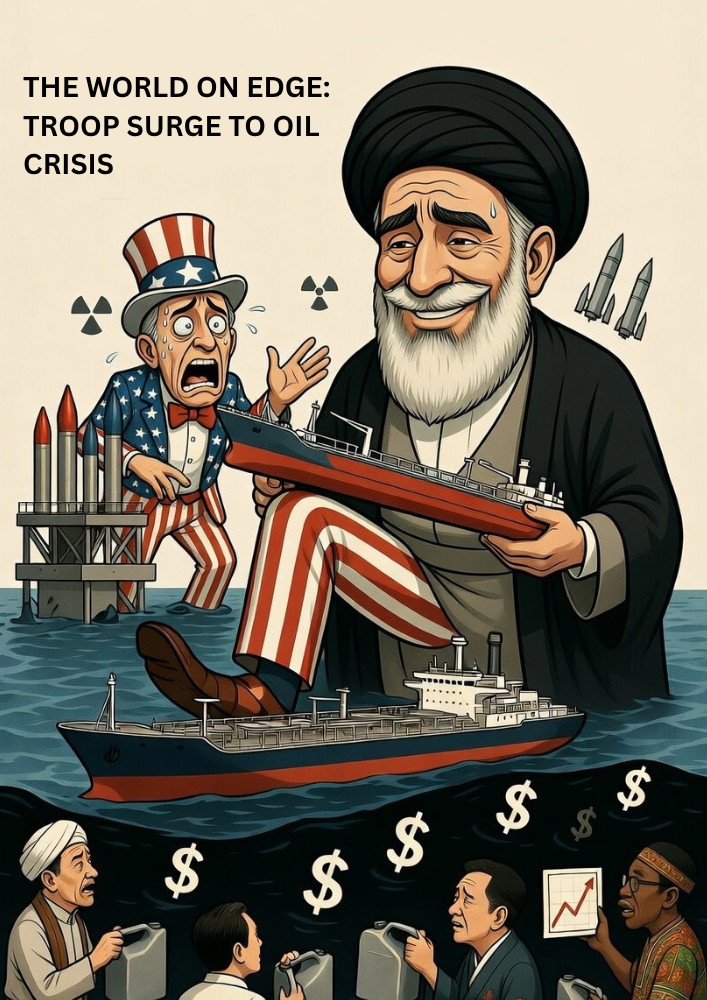
Yet the unfolding military campaign has produced consequences that extend far beyond the battlefield. The closure of the Strait of Hormuz has choked off the flow of roughly 17 to 20 million barrels of oil per day, along with substantial volumes of liquefied natural gas. Middle Eastern production has dropped by an estimated 7 to 10 million barrels daily. The energy markets have reacted sharply: Brent crude, which hovered near $72 prior to the strikes, surged past $120 and now fluctuates between $100 and $112, with volatility driven by every hint of negotiation or renewed escalation.
For already fragile economies, the impact has been immediate and severe. Countries with limited strategic reserves—Vietnam, Pakistan, Indonesia, the Philippines, Thailand, and India—are scrambling to contain the fallout. Governments have implemented emergency measures ranging from school closures to work-from-home mandates, while urging citizens to reduce fuel consumption. In some Gulf-adjacent markets, food prices have risen by as much as 40 to 120 percent as supply chains fracture. Refineries have slowed or halted operations, and inflation is cascading through transportation, electricity, and consumer goods.
Low-income nations, many of which import over 80 percent of their oil through the strait, face a particularly acute crisis. They are caught in a dual squeeze of soaring energy costs and weakening currencies. Institutions such as the World Economic Forum, alongside independent analysts, warn of slowing global growth, heightened recession risks in vulnerable regions, and the potential for humanitarian emergencies if disruptions to food and fertilizer imports persist.
Wealthier economies are not immune, but they possess buffers—strategic reserves, fiscal flexibility, and diversified supply chains—that many developing nations simply lack. The irony is difficult to ignore: a conflict ostensibly aimed at neutralizing security threats has instead magnified global energy insecurity, exposing the fragility of a system still deeply dependent on Middle Eastern oil.
The situation increasingly resembles a high-stakes poker game—except the stakes are measured not in chips, but in human lives and economic stability. The U.S. strategy relies on overwhelming military pressure and extensive regional surveillance to compel Iran into concessions. However, this approach carries significant risks. Strikes that have resulted in civilian and military casualties have hardened Iranian resolve, pushing Tehran to maximize its defensive posture and strengthen regional alliances.
While the economic shock stemming from the closure of the Strait of Hormuz creates incentives for de-escalation, the introduction of additional U.S. ground forces complicates diplomatic pathways. Negotiations become more fragile when both sides are deeply invested in demonstrating strength. Moreover, the prospect of full regime change in Iran appears increasingly unlikely. President Trump has repeatedly signaled a preference for a negotiated outcome—and sooner rather than later—particularly as economic pressures begin to mount domestically.
History suggests that even if a pause is achieved, it may prove temporary. Iran’s leadership faces internal pressure not to appear weak, while regional actors such as the Houthis retain the capacity to sustain low-level conflict. A premature agreement lacking verifiable constraints on nuclear development risks setting the stage for renewed confrontation.
Ultimately, the decisive variable may be economic pain. Whether it is sufficient to drive both sides toward a durable agreement remains uncertain, especially as seasonal pressures and political timelines begin to converge.
For the world’s most vulnerable economies, however, time is a luxury they do not have. Each additional week of disruption translates into lost livelihoods, rising poverty, and growing political instability. The urgency of diplomacy cannot be overstated. A swift, pragmatic resolution would benefit nearly all parties—except those who thrive on prolonged instability.
The coming days of back-channel negotiations will be critical. They will determine whether this crisis resolves into a fragile but functional compromise, or escalates into a broader and far more costly conflict. For nations whose economic stability hinges on Middle Eastern energy flows—and on the day-to-day decisions emanating from Washington—the prevailing sentiment is cautious optimism. But optimism alone is not a strategy. In moments like this, outcomes are shaped not by hope, but by disciplined pressure, clear-eyed realism, and the willingness to compromise.