The call from Iran’s FM
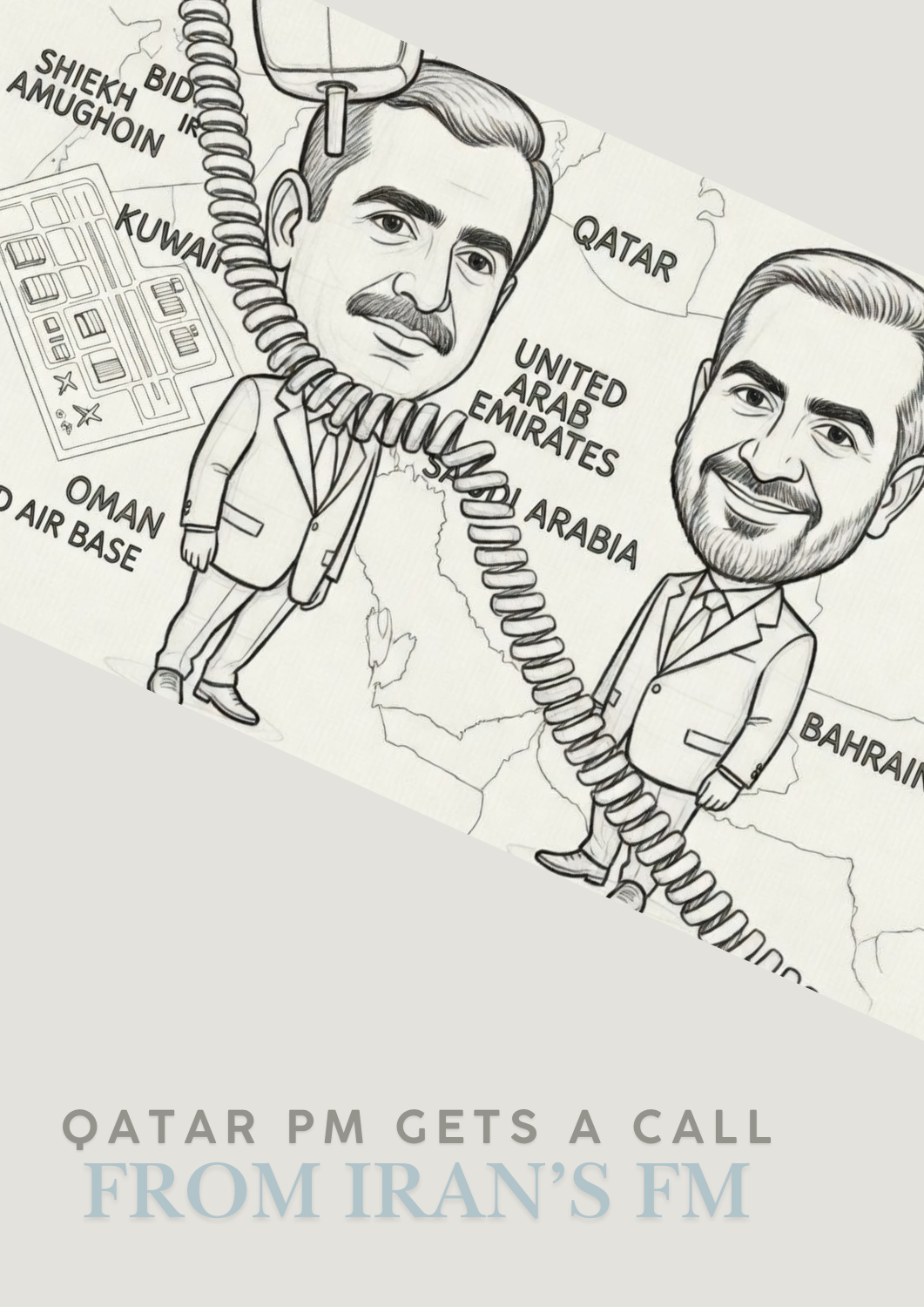
In a region already strained by persistent volatility, a significant diplomatic exchange took place on Monday between Qatar’s Prime Minister and Minister of Foreign Affairs, Sheikh Mohammed bin Abdulrahman bin Jassim Al Thani, and Iran’s Foreign Minister, Abbas Araghchi. The call followed Iran’s retaliatory missile and drone operations across the Gulf and unfolded amid rising tensions that have placed Qatar in a uniquely exposed position as host to major United States military installations.
The conversation occurred against the backdrop of a rapidly escalating conflict that began on February 28, 2026, when U.S. and Israeli forces launched coordinated strikes on Iranian targets after nuclear negotiations in Geneva collapsed. Tehran responded by targeting American assets across several Gulf states, including Qatar, home to Al Udeid Air Base, the largest U.S. military installation in the Middle East.
While Iranian officials have characterized their actions as limited and strategic, reports indicate that the scope of operations extended beyond strictly military objectives. In addition to Al Udeid, attempted strikes reportedly targeted sensitive civilian infrastructure, including Hamad International Airport, power generation facilities, and liquefied natural gas production sites central to Qatar’s economy and to global energy markets. Such developments have heightened international concern about the widening humanitarian and economic implications of the conflict.
During the call, Dr. Araghchi reportedly assured Doha that Iran’s operations were directed solely at American military interests and were not intended to harm the State of Qatar. Sheikh Mohammed firmly rejected this distinction, citing on-the-ground evidence of impacts affecting civilian and residential areas, as well as repeated violations of Qatari airspace by Iranian aircraft and unmanned systems. He described these actions as a “flagrant violation of the sovereignty of the State of Qatar and the principles of international law,” underscoring that they reflect escalation rather than de-escalation.
Qatar’s defense forces have remained on heightened alert since hostilities intensified. Official statements indicate that Qatari air defenses intercepted numerous incoming threats, including ballistic and cruise missiles as well as drones. Authorities also reported the downing of two Iranian Su-24 aircraft on March 2. Although no fatalities were reported in connection with the strike on Al Udeid, shrapnel from intercepted projectiles injured 16 individuals during earlier barrages, and minor damage was recorded in civilian areas. The Qatari Foreign Ministry confirmed that Tehran provided no advance notification of the strikes, further straining bilateral relations.
This exchange marked the second high-level contact between the two officials in recent weeks. On February 27, they discussed the outcome of a third round of U.S.–Iran nuclear talks in Geneva, during which both sides publicly expressed support for continued diplomacy. Qatar has long positioned itself as a regional mediator, facilitating dialogue in conflicts ranging from Gaza to Afghanistan, and reiterated during the call its commitment to peaceful resolution and coordination with international partners to prevent further escalation.
The strategic rationale behind targeting Al Udeid appears clear. The base functions not only as a logistical hub but as a central node in U.S. communications, surveillance, and regional command infrastructure, including satellite-linked systems critical to operational coordination. Disrupting such capabilities could generate cascading effects across allied facilities in Bahrain, Kuwait, Saudi Arabia, and the United Arab Emirates. By degrading communications and radar assets, Iran may be seeking to complicate coalition coordination and alter the operational tempo of the conflict.
Sheikh Mohammed concluded the conversation by calling for an immediate halt to attacks on neutral regional states and reaffirmed Qatar’s inherent right to self-defense under Article 51 of the United Nations Charter. He emphasized that while Qatar remains committed to dialogue and de-escalation, it will not accept violations of its sovereignty or threats to its security.
With missile activity reportedly fluctuating and indications that further military actions are under consideration, the trajectory of the conflict remains uncertain. The broader international community continues to urge restraint, mindful that without a credible diplomatic off-ramp, the confrontation risks expanding into a wider regional war.